Electricity prices and grid fees
Working price (tariff model) and demand charge: the price entry for the analysis.
For the economic analysis you enter two price components, both in the step "Tariff & grid fees":
- the working price (Arbeitspreis) (€/kWh) via one of four tariff models,
- the demand charge (Leistungspreis) (€/kW) for the grid fees (Netzentgelte).
Working price: tariff models
The working price is the price per kWh. Furo supports four models:
A fixed working price per kWh that stays the same for every hour of the year, as in a classic electricity supply contract.
| Field | Description | Example |
|---|---|---|
| Total electricity price | Fixed electricity price incl. all components: procurement, grid energy charge, levies and taxes. Furo warns below €0.10 and above €0.30/kWh: below it is usually just the grid energy charge, above it a value in ct/kWh | €0.22/kWh |
The electricity price is based on the hourly day-ahead spot price (ENTSO-E) plus a fixed surcharge.
Price basis: Furo uses the real spot prices from the period of your load profile, so a load profile from 2025 is calculated with 2025 prices. Furo calculates every year of the lifetime with these prices. You model rising or falling prices with the savings adjustment, see Economics, or you upload your own electricity prices via Custom profile.
| Field | Description | Example |
|---|---|---|
| Premium on Spot Price | levies, taxes, grid working price and supplier margin | €0.16/kWh |
Also called band purchasing or the tranche model: the supply is split into a fixed futures-market share and a variable spot-market share. The battery optimizes only the variable spot-price share.
| Field | Description | Example |
|---|---|---|
| Futures Price | Pure procurement price, without levies, taxes or grid fees | €0.17/kWh |
| Fixed Share | Share of annual consumption bought on the futures market | 75% |
| Premium on Spot Price | Levies, taxes and grid fees, added to both the futures and the spot price | €0.06/kWh |
Example: €0.17/kWh futures price plus €0.06/kWh surcharge gives €0.23/kWh total cost for the band supply.
Structured power procurement: planning certainty and spot-price flexibility (blog article)For special tariffs you upload an hourly tariff profile as a CSV file with 8,760 values. The prices are used directly without modification.
Grid power for the battery: When the battery charges from the grid, every kWh pays the full working price you enter here, including grid fees, levies and electricity tax. Furo does not include any exemption for stored grid power, so the results are conservative on this point. The only exception is the DAA & IDA Simulation of flexibility marketing.
Demand charge (grid fees)
The demand charge is the price network operators charge for providing the maximum connection capacity required, given in €/kW. The battery lowers it by shaving the peak load. Typical values are €20–300/kW/year or €2–25/kW/month.
Grid fee reform (AgNes): Furo does not yet model the Federal Network Agency's planned new grid fee system. AgNes is being implemented and will be released soon.
Annual or monthly billing
Whether the demand charge relates to the annual peak load or the monthly peak load depends on the country of your address; the unit adapts accordingly (€/kW/year or €/kW/month):
- Germany: annual (annual peak load).
- Switzerland: monthly, switchable to annual via the field "Power Price Period" — some distribution network operators (DSOs) will bill the demand charge on the annual peak load from 2027.
- Austria: monthly, switchable to annual via the field "Power Price Period".
2,500-hour rule (Germany only)
In Germany the demand charge can be entered in two tiers under the 2,500-hour rule (2.500-Vollbenutzungsstunden-Regel, § 19 StromNEV), the German grid-fee ordinance: one value each for ≥ 2,500 hours and < 2,500 hours. The second value is optional; without it, the value for ≥ 2,500 hours is used.
Grid fees under SNE-V (Austria only)
For Austrian addresses, the "SNE-V" button (for example "SNE-V Wien · NE 7") prefills the demand charge, grid usage fee and grid loss fee from the Systemnutzungsentgelte-Verordnung (SNE-V 2018, 2026 version). You only pick the grid level (NE 4–7).
Tariffs apply per Netzbereich (grid area), which follows the grid operator, not the federal state. Furo finds the operator from the postcode. If two operators share a postcode, pick the right one under "Grid operator" in the same menu.
Price entry from your electricity bill
On the bill all price components are listed individually, all as net amounts. That is exactly how you enter them in Furo: net (excl. VAT), and the tool shows the price total as "Total (net)". Purple marks the Electricity Price, red the Power Price:
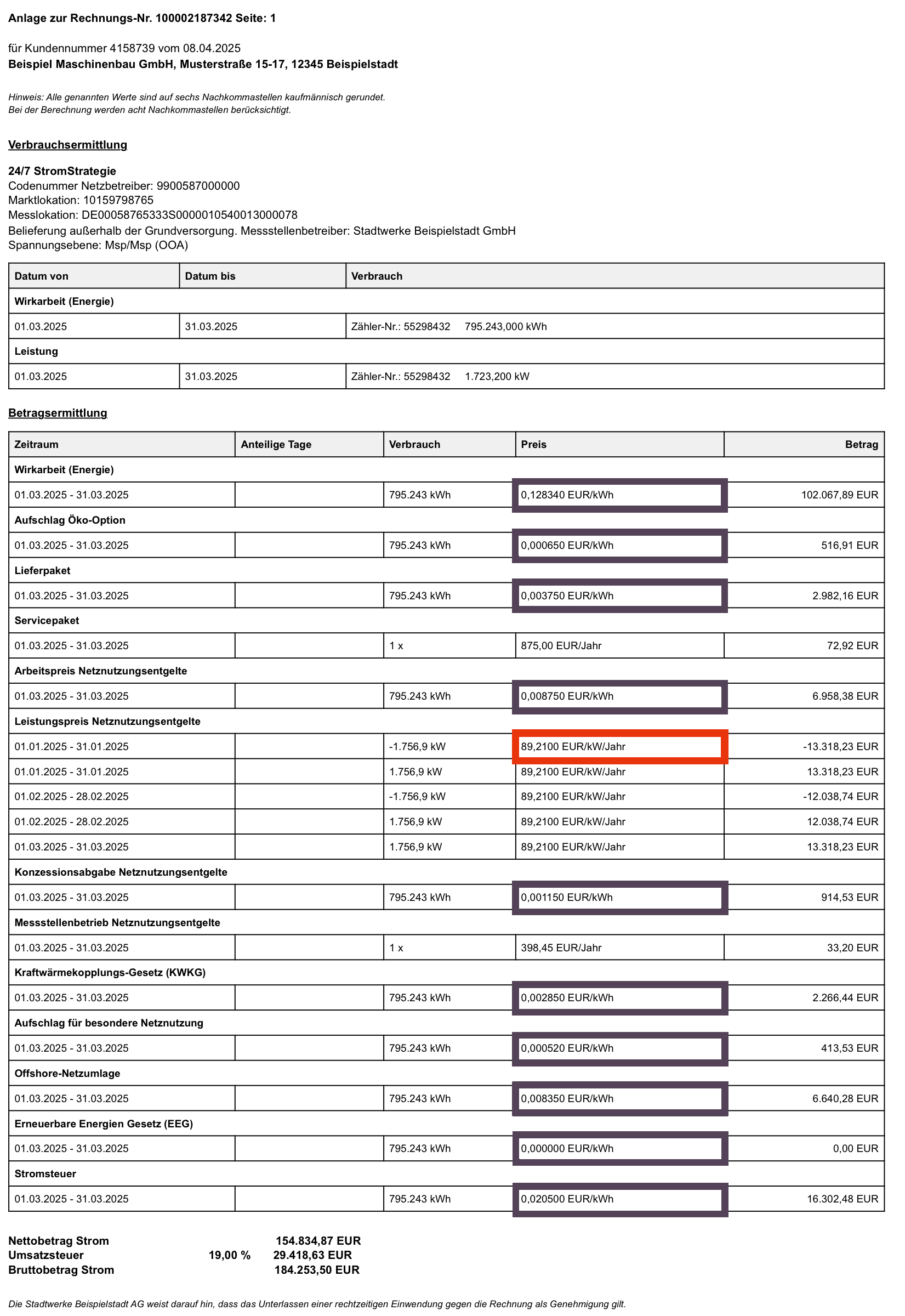
There are two price fields: the Electricity Price (€/kWh) and the Power Price (€/kW). The toggle "Break down prices" determines how you enter the Electricity Price:
- Off (Image 1): a single field "Total electricity price" into which you enter the sum of all €/kWh items.
- On (Image 2): one field per item; the levies are pre-filled and overridable, and the tool shows the sum as Total (net).
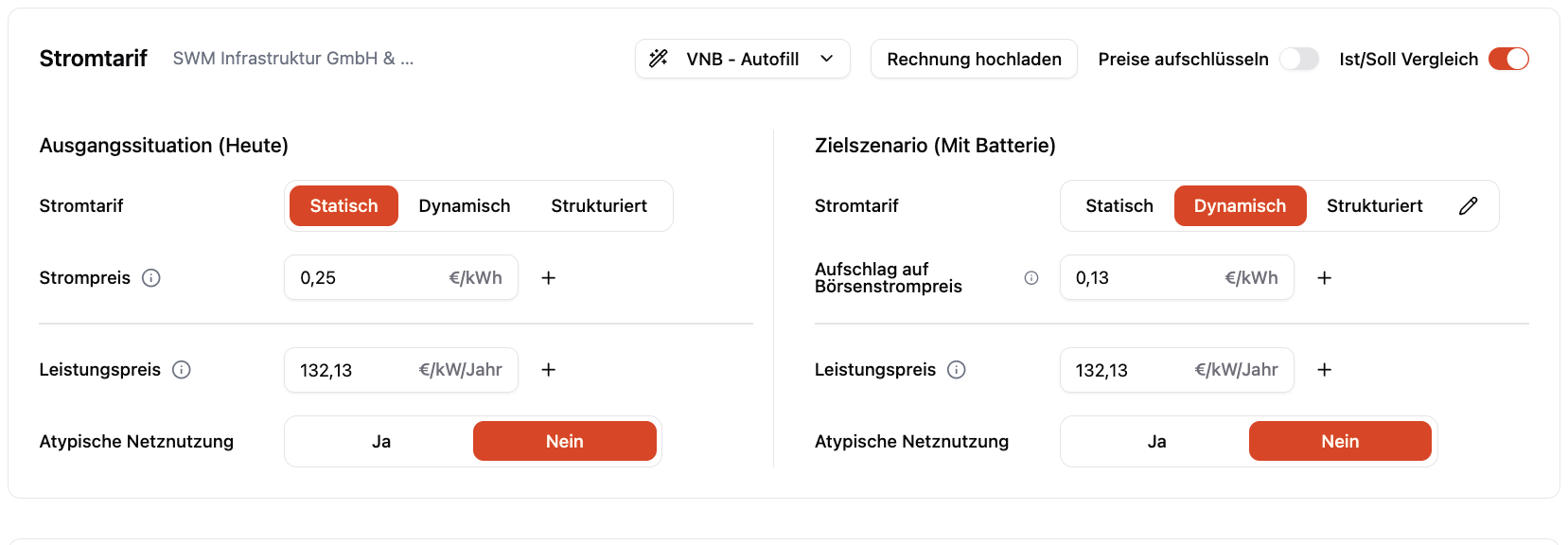
Image 1: "Break down prices" off, a single "Electricity Price" field.
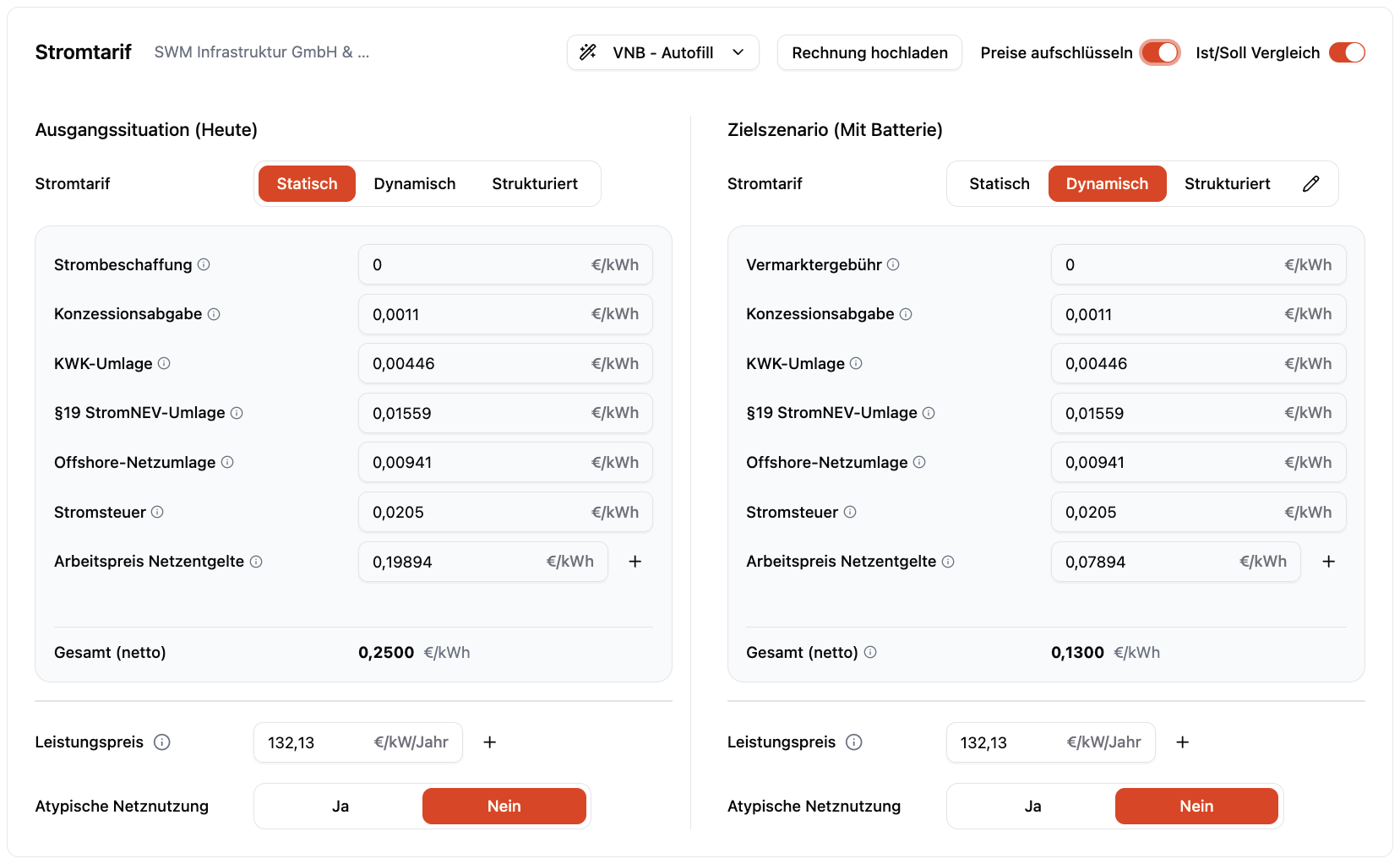
Image 2: "Break down prices" on, one field per price component.
This is how the items on the bill map to the fields in the tool (detailed mode, Image 2; in the simple mode the same items together make up the one electricity price value):
| On the bill (net) | Field in the tool | Price field |
|---|---|---|
| active energy (Wirkarbeit) + Öko-Option + Lieferpaket | Energy Procurement (dynamic tariff: Marketer Fee) | Electricity Price |
| Arbeitspreis Netznutzungsentgelte (grid usage charge, working price) | Grid Working Price | Electricity Price |
| Konzessionsabgabe (concession levy) | Concession Fee | Electricity Price |
| KWKG | CHP Surcharge | Electricity Price |
| Aufschlag für besondere Netznutzung | §19 StromNEV Surcharge | Electricity Price |
| Offshore-Netzumlage (offshore grid surcharge) | Offshore Network Surcharge | Electricity Price |
| Stromsteuer (electricity tax) | Electricity Tax | Electricity Price |
| Leistungspreis Netznutzungsentgelte (demand charge, grid usage) | Power Price | Power Price |
In the example: Electricity Price €0.174860/kWh, Power Price €89.2100/kW/year (net; Germany: annual). You add separate values for ≥ and < 2,500 hours via the "+" field (see "2,500-hour rule" above).